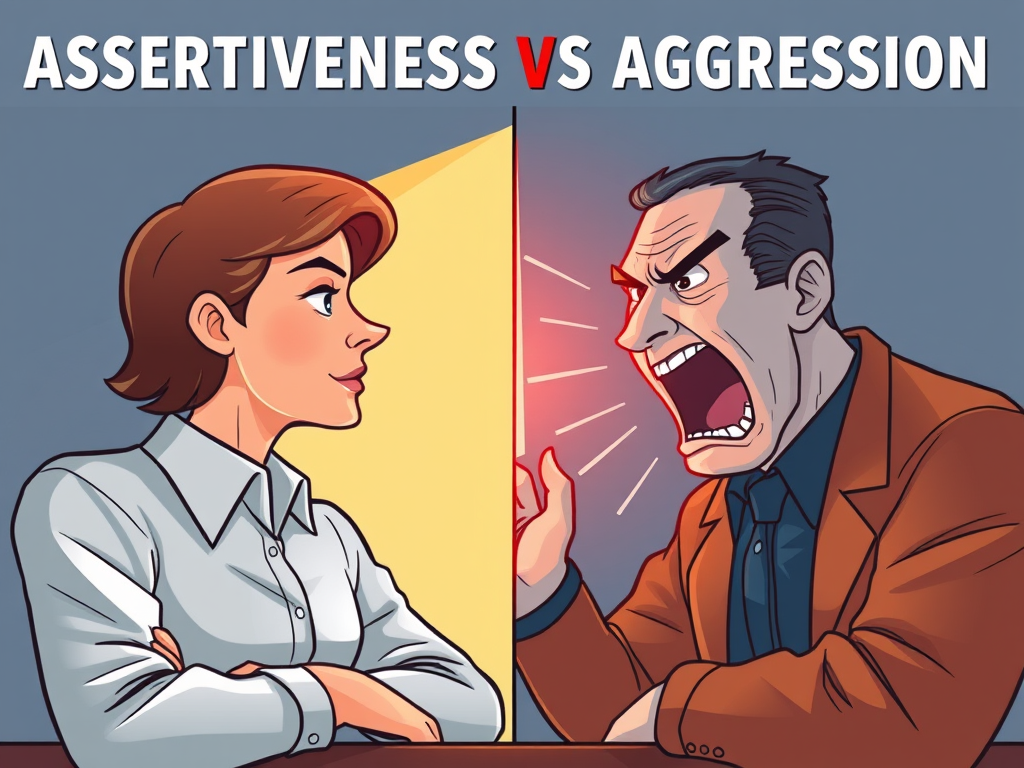
Let’s get real—have you ever left a conversation feeling like you either bulldozed someone or got steamrolled yourself? If so, you’re not alone. Most of us find it challenging to stand up for ourselves while staying kind. At the same time, we strive to be respectful and emotionally intelligent. That’s where assertiveness steps in. It is like the calm, confident friend who knows their worth. They don’t need to shout it from the rooftops.
Aggression, on the other hand, is like that loud neighbor. They don’t just ask for the music to be turned down. They bang on your door and yell at your dog for good measure.
Master Emotional Intelligence for Better Conversations(Opens in a new browser tab)
If you’re ready to build healthier relationships, strengthen your communication, and show up with more confidence, let’s break it down. You can do this without being pushy. It’s plain and simple.
💬 What Is Assertiveness?
Assertiveness is expressing your thoughts, feelings, and needs in an open, honest, and respectful way. It’s the sweet spot where self-awareness meets respect for others.
When you’re assertive, you’re not just saying, “Hey, I matter.” You’re also saying, “And so do you.”
Signs of Assertiveness:
- You use “I” statements like “I feel…” or “I need…”
- You maintain calm and direct eye contact
- You listen as much as you speak
- You set healthy boundaries without guilt
- You say no without over-explaining
Real-Life Example:
Imagine your coworker keeps interrupting your focus time. An assertive response might be:
“I understand you have questions, but I need quiet time from 10 to 12 to finish this project. Can we chat right after lunch?”
Boom—clear, kind, and confident.
🔥 What Is Aggression?
Aggression comes from a place of control, intimidation, or unresolved anxiety. It’s often rooted in fear, even if it comes out as anger or dominance.
Aggression ignores the rights and feelings of others to get what it wants—fast and hard.
Signs of Aggression:
- Raising your voice or using a harsh tone
- Interrupting or talking over others
- Using guilt, shame, or threats to influence
- Dismissing others’ perspectives
- Physically invading space or using body language to intimidate
Real-Life Example:
Same situation, aggressive response:
“Can you not see I’m working? Stop bothering me!”
Oof. That might get the result you want short term—but it’ll burn bridges fast.
🎯 Assertiveness Is Empowering, Aggression Is Alienating
Let’s get one thing straight: being assertive doesn’t mean being a doormat or a pushover. It’s actually the ultimate form of self-care—and it’s a game-changer for emotional intelligence.
Assertiveness helps you:
- Protect your mental health
- Reduce anxiety around confrontation
- Build trust and deeper relationships
- Communicate effectively in your career or startup
- Model emotional balance for your children or younger team members
Aggression, on the other hand, often creates:
- Resentment
- Damaged relationships
- Workplace tension
- Low confidence in the long run
- Regret (a lot of it)
🧠 The Mind-Body Connection of Assertive Communication
Here’s the holistic twist: when you practice assertiveness, your body feels it.
Assertive communication is linked with:
- Lower stress hormones
- Improved heart rate variability
- Better brain health and executive function (decision-making, planning, focus)
Aggression? The opposite. It triggers your body’s fight-or-flight response, putting strain on your nervous system and long-term well-being.
🛠️ How to Practice Assertiveness Without Turning Aggressive
Ready to strengthen your assertiveness muscle? Think of it like going to the gym—but for your communication style.
1. Pause Before You React
Take a breath. This moment of silence can save you from slipping into aggression.
2. Use Calm, Firm Language
Stick to facts. Avoid exaggeration or blame. Think:
“I noticed the report was late,” instead of, “You’re always messing things up!”
3. Practice Time-Blocking for Emotional Clarity
Feeling frazzled makes you more likely to lash out. Use time-blocking to create space for self-reflection and focus.
4. Set Boundaries With Kindness
Boundaries aren’t walls—they’re doors. Say:
“I’m not available after 6 p.m., but I’ll respond first thing in the morning.”
5. Role-Play Tough Talks
Rehearse with a friend or even in front of a mirror. Confidence grows with preparation.
🤝 Teaching Assertiveness to Younger Kids
Assertiveness is a life skill, and the earlier we teach it, the better. Help your kids or students practice:
- Naming their emotions
- Asking for help respectfully
- Saying “no” without fear
- Practicing gratitude to balance their needs with kindness
This builds future adults who don’t shy away from hard conversations—and who also don’t bulldoze their way through them.
🌱 Final Thoughts: Assertiveness Is the Root of Empowerment
Here’s the heart of it: assertiveness is your voice in balance. It’s the bridge between being heard and being kind. It’s the superpower that helps you say:
“This is who I am. I respect myself—and I respect you too.”
So next time you’re in a tricky situation—pause. Breathe. Then speak with clarity, not force. The more you choose assertiveness, the more your confidence grows, your relationships deepen, and your emotional world stabilizes.
And let’s face it—when you communicate like that, you’re not just talking. You’re leading.
💡 Your Empowerment Challenge:
Pick one conversation you’ve been avoiding. Use what you’ve learned here to approach it assertively. You don’t need to be perfect—just be real, respectful, and clear.
You’ve got this. 💪




Leave a Reply