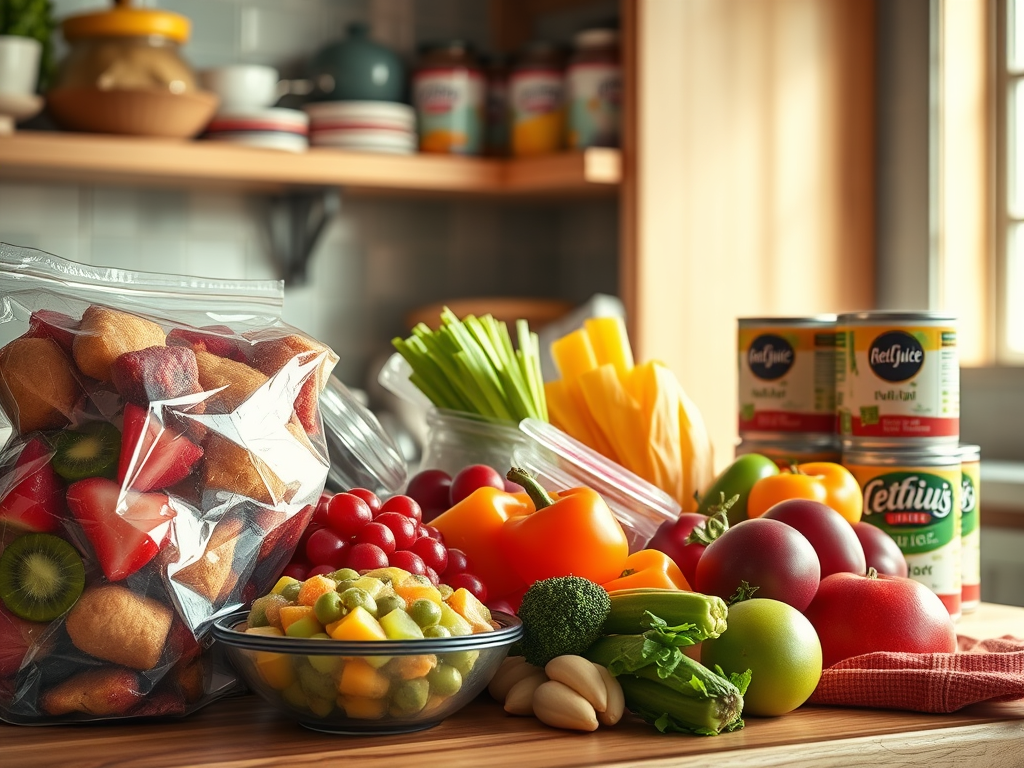
Eating well doesn’t have to mean spending more. For seniors on a budget, frozen and canned foods can be affordable, convenient, and surprisingly nutritious options. With a little know-how, these pantry staples can help create balanced meals without breaking the bank.
Recommended Reading:
Healthy Eating, A Seniors Guide
Helpful Tool:
Weekly Meal Planner
Why Frozen and Canned Foods Work for Seniors
- Budget-Friendly: Frozen and canned items often cost less than fresh produce and proteins, especially when out of season. Bulk buying and sales can stretch your dollar even further.
- Long Shelf Life: These foods last much longer than fresh items, reducing waste and the need for frequent grocery trips.
- Ease of Preparation: Many frozen and canned foods are pre-cut, pre-cooked, or ready to heat. This makes meal prep quicker and easier. These options are perfect for seniors with limited energy or mobility.
- Nutrient Retention: Modern freezing and canning techniques preserve most of the vitamins and minerals, so you’re still getting essential nutrients.
Healthy Cooking Tips for Seniors on a Budget(Opens in a new browser tab)
Smart Choices for Frozen Foods
Not all frozen foods are created equal. Here’s how to choose the healthiest options:
- Frozen Fruits and Vegetables: Look for plain options without added sauces or sugar. Frozen berries, spinach, broccoli, and mixed veggies are great staples.
- Lean Proteins: Frozen fish fillets, chicken breasts, and turkey burgers are affordable and easy to cook.
- Whole Grains: Frozen brown rice, quinoa, and whole-grain bread can be nutritious time-savers.
- Avoid: Processed frozen meals often contain high levels of sodium, unhealthy fats, and preservatives.
Best Picks for Canned Foods
Canned foods can be just as nutritious if you know what to look for:
- Vegetables: Opt for “no salt added” or “low sodium” canned veggies. Rinsing them under water can also help reduce sodium.
- Fruits: Choose canned fruits packed in 100% juice or water instead of sugary syrups.
- Beans and Legumes: Canned beans (like black beans, chickpeas, and lentils) are protein- and fiber-rich. Rinse before eating to lower sodium.
- Fish: Canned tuna, salmon, and sardines are excellent sources of omega-3s. Pick those packed in water for less fat.
- Soup: Look for low-sodium, broth-based soups rather than creamy varieties.
Tips for Making Meals Healthier
- Balance the Plate: Combine frozen veggies, canned beans, and a lean protein for a well-rounded meal.
- Spice It Up: Use herbs and spices instead of salt for added flavor. Garlic powder, pepper, and dried herbs work wonders.
- Add Fresh When You Can: Pair frozen or canned items with fresh produce when available to boost flavor and nutrition.
- Portion Control: Divide bulk frozen meals into smaller servings to avoid overeating and make meals last longer.
Simple Meal Ideas
- Veggie Stir-Fry: Sauté frozen mixed vegetables with canned chickpeas and a splash of low-sodium soy sauce.
- Tuna Salad: Mix canned tuna with plain Greek yogurt, chopped celery, and herbs. Serve with whole-grain crackers.
- Hearty Soup: Combine low-sodium canned soup with frozen veggies and canned beans for a filling, nutrient-packed meal.
- Smoothie: Blend frozen berries, a banana, and milk (or a milk alternative) for a quick, healthy breakfast.
Final Thoughts
Frozen and canned foods are powerful tools for seniors looking to eat well without overspending. By making smart choices and getting creative in the kitchen, you can enjoy delicious, nutritious meals every day.
Remember, eating healthy doesn’t have to be complicated or costly. It’s about making small, mindful choices that support your health and fit your lifestyle.



Leave a Reply